Mindfulness Habits You Can Start Today
Practical mindfulness habits with tiny starter versions, routines, habit stacks, tracking tips, and a 7-day beginner plan.
Mindfulness habits are small actions you repeat to train attention. You do not need a long meditation session to begin. Start with one tiny practice, attach it to something you already do, and make it clear when it is done.
Use this guide to choose a mindfulness habit you can repeat on a normal busy day. If you want more tiny ideas, you can also browse the mindfulness habit ideas page or use a broader habit system like this habit-building guide.
What are mindfulness habits?
Mindfulness habits are small repeated actions that help you notice what is happening before you react. That might mean noticing your breath, body, emotions, thoughts, surroundings, or impulses.
Mindfulness does not have to mean sitting silently for 30 minutes. It can be a 30-second pause before opening email, a 2-minute gratitude note, a mindful walk, or one slow sip of coffee.
The beginner rule is simple: start so small that the habit is easy to repeat even on a busy day. A habit is different from a one-time practice because it has a cue, a small action, and a way to know it is complete.
Starter definition box:
- Cue: after brushing teeth
- Action: meditate for 3 minutes
- Done: timer ends and the habit is checked off
That is a real mindfulness habit because the start, action, and finish are all clear.
The best mindfulness habits to start with
The best mindfulness habits are clear enough to do today. Avoid vague goals like “be more present.” Choose a tiny behavior instead.
Beginner habit menu:
- Meditate 3 minutes.
- Gratitude 2 minutes.
- Take 3 slow breaths before work.
- Body scan for 60 seconds.
- Write one mood sentence.
- Take a 10-minute mindful walk.
- Pause for 10 seconds before checking social media.
Group them by what you need:
Calmer mornings
- Meditate for 3 minutes after brushing teeth. Done: timer ends.
- Write one gratitude note for 2 minutes. Done: one note is written.
- Take one mindful sip of coffee or tea. Done: one sip without multitasking.
Stress resets
- Take 3 slow breaths before replying to a tense message. Done: 3 breaths counted.
- Do a 60-second body scan. Done: timer ends.
- Name one emotion. Done: say or write “I feel ___.”
Better focus
- Take one breath before opening email. Done: one breath completed.
- Set a 2-minute breathing timer before a focus block. Done: timer ends.
Sleep wind-down
- Write one sentence in a mood journal. Done: one sentence written.
- Write one gratitude note at night. Done: one note written.
More intentional phone use
- Pause for 10 seconds before checking social media. Done: count to 10.
- Ask, “What am I opening this for?” Done: answer in your head.
Choose one or two habits at first. A full mindfulness makeover sounds appealing, but one repeatable habit is more useful than five abandoned ones.
A simple morning mindfulness routine
Morning is a useful time for mindfulness because the cue is predictable. You wake up, brush your teeth, pour coffee, get dressed, or sit down before work or school. Those actions can carry the habit even when motivation is low.
Here is a routine that takes under 10 minutes:
Sample routine with times:
- 7:00: wake up
- 7:03: drink water
- 7:05: meditate for 3 minutes
- 7:08: write one gratitude note for 2 minutes
- 7:10: choose one intention for the day
Your intention can be simple: “I will pause before rushing,” “I will listen fully once today,” or “I will take one reset breath before email.”
Fallback version: after brushing teeth, take 3 slow breaths.
The fallback matters. It keeps the habit alive on rushed mornings. You are not depending on the perfect morning. You are tying mindfulness to something that already happens.
Mindfulness habits for work, study, and busy days
Mindfulness can fit into normal interruptions. You do not need to close your eyes, leave the room, or explain what you are doing.
Try these during the day:
- Before a meeting, relax your shoulders for 30 seconds.
- Between tasks, take one slow breath and notice your next action.
- Before replying to a message, name the emotion you feel.
- After lunch, take a 5-minute mindful walk.
- Before a study block, set a 2-minute breathing timer.
Timed habits are useful when the practice has a clear duration. A 2-minute reset is easier to start than “calm down.” A 5-minute walk is easier to track than “be mindful outside.”
Workday reset routine:
- 9:00: before opening email, take 3 breaths.
- 11:00: before a meeting, relax shoulders for 30 seconds.
- 1:30: after lunch, take a 5-minute mindful walk.
- 3:00: before the next focus block, set a 2-minute breathing timer.
If you are studying, swap “meeting” for “class” or “study session.” The habit loop stays the same.
Habit-stacking lines for mindfulness
Habit stacking means attaching a new behavior to something you already do. The best cue is an action that already happens every day, not a time you often miss.
Use these copyable lines:
- After I pour coffee, I take 3 slow breaths.
- After I sit at my desk, I meditate for 3 minutes.
- After I finish lunch, I take a 5-minute mindful walk.
- After I plug in my phone at night, I write one gratitude note.
- Before I answer a tense message, I name the emotion I am feeling.
- After I brush my teeth, I do a 60-second body scan.
- Before I check social media, I pause for 10 seconds.
- Before dinner, I take one mindful breath and notice the first bite.
- After I enter the house, I pause before starting the next task.
- Before I respond in a hard conversation, I feel my feet on the floor.
Test one stack for a week before adding another. If you want more examples, see these habit stacking examples.
How to track mindfulness habits without overcomplicating them
Tracking helps make invisible practice visible. You may not feel different every day, but you can still see that you showed up.
Match the tracking style to the habit:
- Check off meditation, gratitude, or a mood journal entry.
- Count mindful breaths, pauses, or emotion labels.
- Time a body scan, mindful walk, meditation, or breathing reset.
- Write one short note when the habit is reflective.
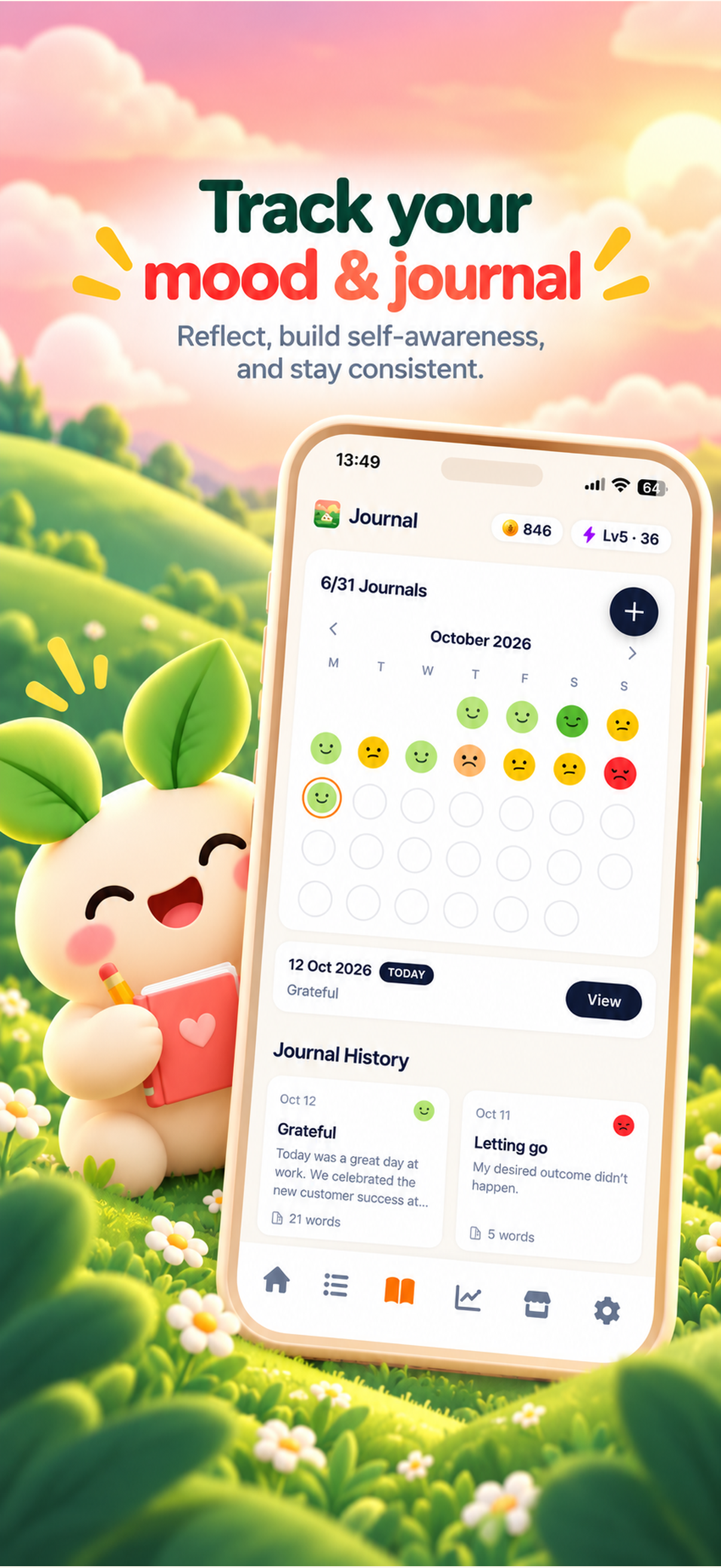
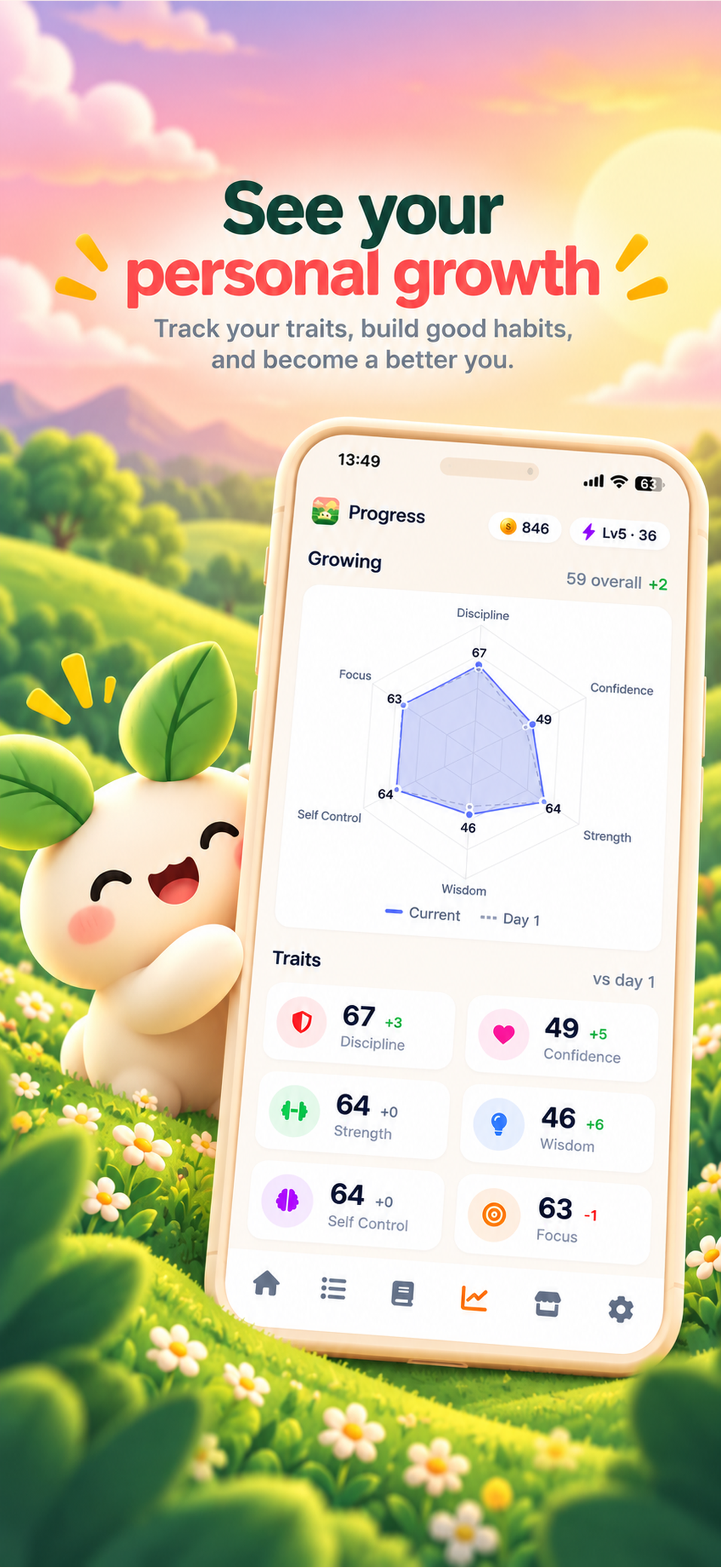
A habit tracker can show daily progress and streaks, which helps you notice consistency. If you prefer an app, ThrivePal is a habit tracker app for iPhone and Android. It is free to download, with an optional Premium subscription that adds more. It supports check-off, counted, and timed habits, plus reminders, daily progress, streaks, a mood journal, and rewards where completing habits, journal entries, and to-dos earns coins and grows your companion.
Tracking setup example:
- Habit 1: Meditate 3 minutes, timed, reminder at 7:05 AM.
- Habit 2: Gratitude 2 minutes, checked off, reminder at 9:30 PM.
- Habit 3: Mindful breaths, counted, target 3 breaths before opening email.
Keep your tracker short. If tracking becomes heavier than the habit, shrink the setup.
A 7-day mindfulness habit plan
Start with level 1 on purpose. Level 1 should feel deliberately small, like meditate 3 minutes or gratitude 2 minutes. Move up only when the current level feels easy.
One-week plan:
- Day 1: Meditate 3 minutes after brushing teeth.
- Day 2: Repeat and check it off.
- Day 3: Add gratitude for 2 minutes at night.
- Day 4: Add 3 breaths before opening email.
- Day 5: Take one 5-minute mindful walk.
- Day 6: Write one mood journal sentence.
- Day 7: Review what felt easiest and keep only the 1–2 habits you will repeat next week.
Do not level up because you had one good day. Level up when the habit feels easy for several normal days. Habit formation usually takes weeks to months, so the first week is about proving the routine can fit. For a realistic timeline, read how long it takes to form a habit.
Common problems and tiny fixes
Mindfulness habits fail for normal reasons: forgetting, restlessness, starting too big, missing a day, or trying too many habits at once. The fix is usually to lower the level, not quit.
Troubleshooting checklist:
- If I forget, add a reminder or attach the habit to brushing teeth.
- If I feel restless, do 3 breaths instead of 3 minutes.
- If I think the habit is too small, repeat it for one week before making it bigger.
- If I miss a day, restart with the smallest version the next day.
- If I am doing too many habits, keep only one morning habit and one evening habit.
- If meditation feels hard, switch to a 60-second body scan.
Missing one day does not erase the habit. It gives you information. Make the next version easier to start.
FAQ
What are examples of mindfulness habits?
Examples include meditating for 3 minutes, writing gratitude for 2 minutes, taking 3 slow breaths before work, doing a 60-second body scan, naming one emotion, taking a mindful walk, or writing one mood journal sentence.
How do I start a daily mindfulness habit?
Pick one tiny action, attach it to a cue you already do, and decide how you will know it is complete. For example: after brushing teeth, meditate for 3 minutes, then check it off.
How long should a beginner practice mindfulness each day?
Start with 2 to 5 minutes. The goal is repetition, not length. Increase only when the current version feels easy.
Is mindfulness the same as meditation?
No. Meditation is one way to practice mindfulness. Mindfulness can also be a breath before email, a mindful sip of tea, a short walk, or noticing an emotion before reacting.
What should I do if I miss a day?
Restart the next day with the smallest version. Do not try to “make up” the missed day. A 30-second reset is enough to keep the habit alive.