How to Build a Habit That Sticks in 14 Days
Build a habit that sticks with a tiny starter habit, a clear cue, simple tracking, missed-day rescue plan, and 14-day system.
A habit sticks when it is small, clearly cued, easy to do, tracked simply, and protected from normal setbacks. Start with one tiny behavior, attach it to something you already do, and repeat the minimum version for two weeks before you try to make it bigger.
Use this guide as a 14-day build plan. You do not need a perfect routine. You need one promise you can keep on a normal hard day.
Start with one habit small enough to do on your worst normal day
Most people choose a habit that sounds impressive: work out for an hour, read a book a week, meditate for 30 minutes, quit every bad habit at once. That can work for a few motivated days, but habits stick when the starting version is almost impossible to fail.
Use this rule of thumb: choose a version that takes 2–10 minutes, or make it 50–80% easier than what you think you “should” do.
Good starter levels look like this:
- Walk 10 minutes.
- Read 10 minutes.
- Do 2 push-ups.
- Drink 4 glasses of water.
- Meditate for 3 minutes.
- Write gratitude for 2 minutes.
- Have no caffeine after 4 PM.
- Keep the first 15 minutes of the morning phone-free.
Define the behavior, not just the outcome. “Get fit” is too vague. “Walk 10 minutes after lunch on weekdays” is clear. “Be less stressed” is vague. “Meditate for 3 minutes after brushing my teeth” is usable.
If you want starter ideas, ThrivePal includes habits with deliberately small Level 1 options and lets users move up a level when it feels easy. You can browse categories such as movement, mindfulness, focus, screen time, and recovery in the habit ideas library.
Starter-level chooser
Write this sentence:
“For the next 7 days, I will [tiny behavior] for [time/count] on [days].”
Examples:
- “I will walk for 10 minutes after lunch on weekdays.”
- “I will meditate for 3 minutes after brushing my teeth.”
- “I will do 2 push-ups before my shower.”
- “I will keep social media under 3 hours a day.”
Attach the habit to a cue that already happens
A sticky habit needs a trigger. Motivation is too inconsistent to be the trigger. A better trigger is something that already happens in your day.
This is habit stacking: after an existing action, do the new habit immediately.
Choose a cue that is specific, daily, and close to the new behavior. “In the morning” is too vague. “After I pour coffee” is concrete. “At night” is vague. “After I brush my teeth at night” is better.
Examples:
- Morning: after I pour coffee, I will journal for one minute.
- Workday: after I open my laptop, I will start one focus timer.
- Evening: after I plug in my phone, I will read for 10 minutes.
- Weekend: after breakfast, I will take a 10-minute walk.
Habit-stacking script
“After I [existing routine], I will [tiny habit].”
Examples:
- “After I pour coffee, I will write one sentence in my journal.”
- “After I put my lunch plate in the sink, I will walk 10 minutes.”
- “After I brush my teeth at night, I will put my phone across the room.”
- “After I open my laptop, I will run one 25-minute focus timer.”
Design the environment so the habit is the easiest option
Friction beats willpower. If the good habit is visible and easy, you are more likely to do it. If the unwanted habit is slightly harder, you create a useful pause.
Set up the habit before the cue happens:
- Put walking shoes by the door.
- Fill a water bottle before bed.
- Leave a book on your pillow.
- Put your phone outside the bedroom.
- Lay out workout clothes the night before.
- Decide the workout location now, not when you are tired.
- Prepare a default breakfast if nutrition is your focus.
For reducing screen time, remember that the habit can be tracked by you. If you are working on this goal, try a simple user-tracked limit such as “social media under 3 hours a day” or “15 phone-free minutes in the morning.” You can also see ideas for screen-time habits.
Do a two-minute reset tonight. Remove one obstacle before it happens.
Tonight’s 5-item setup checklist
- Put the habit tool where you will see it.
- Remove one object that pulls you away.
- Decide the exact location.
- Prepare the first 30 seconds of the habit.
- Put a reminder where the cue happens.
Illustrative setup: place walking shoes by the door, fill a water bottle, put the phone charger outside the bedroom, and leave a sticky note on the coffee maker that says “3-minute meditation.”
Track the habit with a rule simple enough to follow every day
Tracking should answer one question: did the habit happen today?
Use the simplest tracking style for the behavior:
- Check-off habits for yes/no actions: “no caffeine after 4 PM.”
- Counted habits for repetitions or amounts: glasses of water, push-ups, servings of vegetables.
- Timed habits for duration: meditation, reading, walking, focus sessions.
Track completion, not perfection, especially during the first two weeks. If your minimum was 10 minutes of walking, a 10-minute walk counts. You do not need 30 minutes to earn the check.
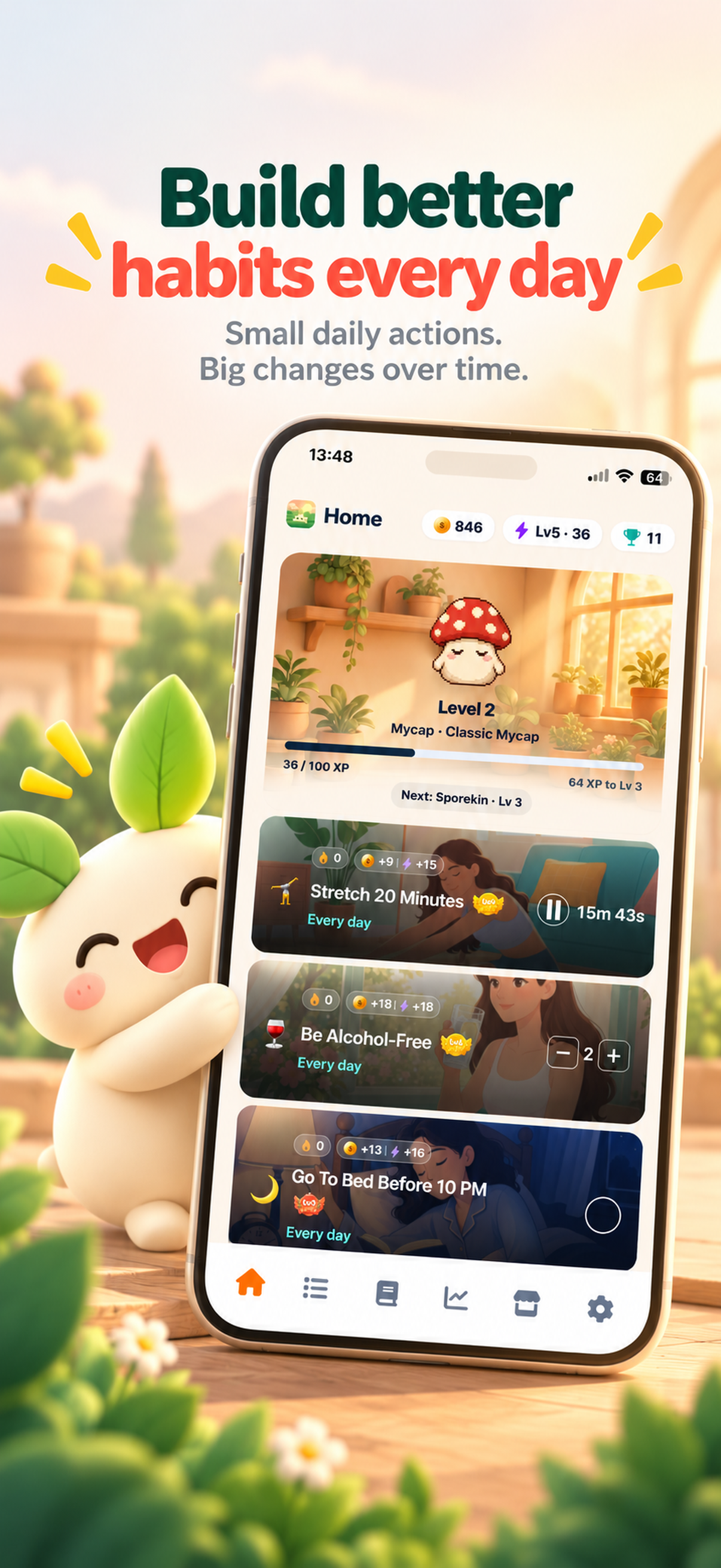
A habit tracker app can help if it makes the rule easier, not more complicated. ThrivePal lets users check off, count, or time habits, and timed habits can use an optional Pomodoro rhythm.
Tracking rule template
“A day counts if I complete [minimum version], even if I do not do more.”
Examples:
- “A walking day counts at 10 minutes.”
- “A strength day counts at 2 push-ups.”
- “A mindfulness day counts at 3 minutes.”
- “A hydration day counts at 4 glasses of water.”
Use rewards that reinforce the identity you want
Immediate rewards help because long-term benefits are delayed. Better sleep, strength, focus, and confidence take time. A small reward right after the habit tells your brain, “This was worth doing.”
Choose rewards that support the habit. If your goal is better nutrition, do not make the reward something that undermines that goal. If your goal is less evening screen time, do not reward yourself with a long scroll.
Good rewards are small and immediate:
- Check it off.
- Say “done.”
- Mark a streak.
- Pair it with tea, music, or a short stretch.
- Tell an accountability partner.
Visual progress can make the reward feel real sooner. Streaks, badges, milestones, and progress marks all help you see that the habit is becoming part of your identity.
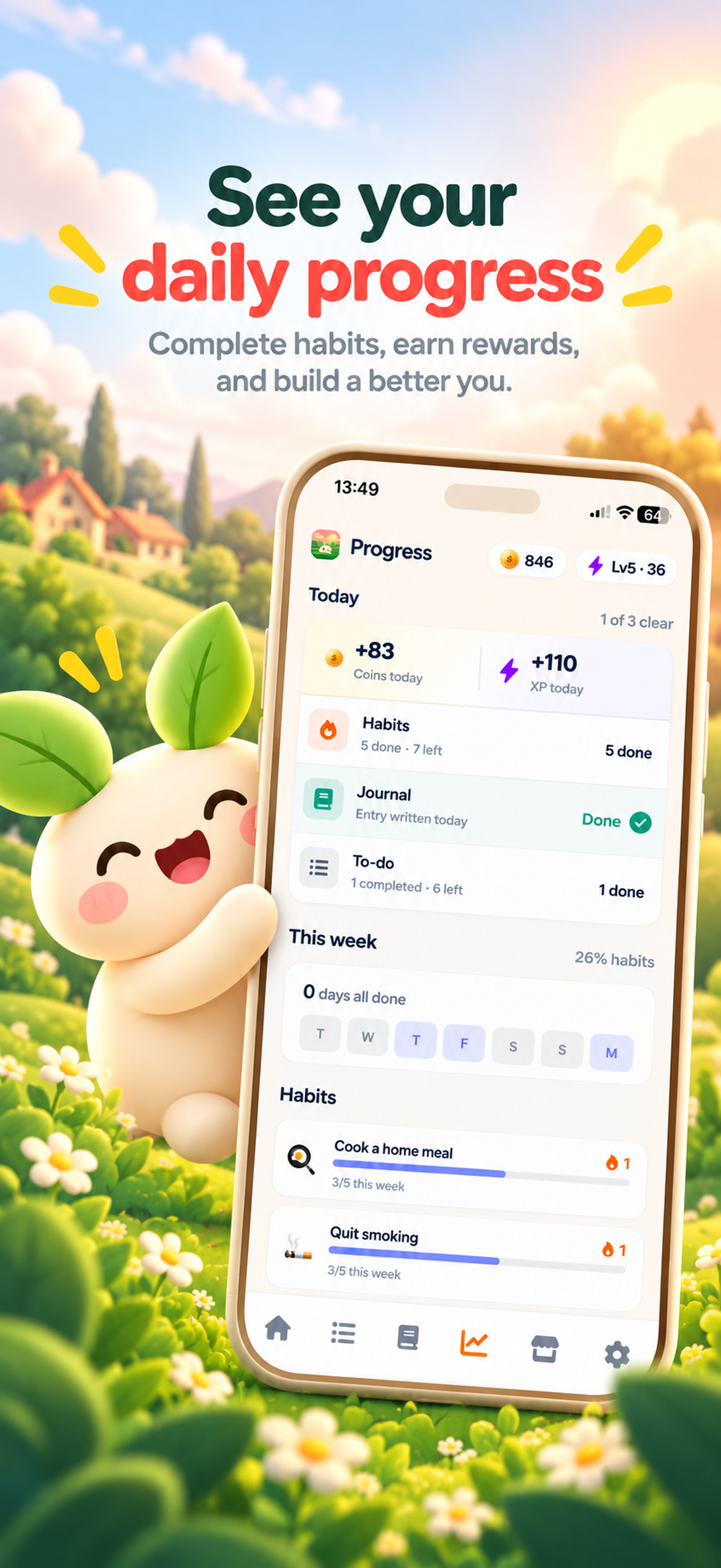
In ThrivePal, completing habits, journal entries, and to-dos earns coins and grows a companion, which unlocks new forms as it levels up. It also supports badges, achievements, streaks, milestones, and traits tied to habits kept.
Reward menu
After the habit, choose one immediate reward:
- Check it off.
- Say “I kept the promise.”
- Add a coin/progress mark in your tracker.
- Enjoy a 2-minute tea, music, or stretch break.
- Text an accountability partner “done.”
Illustrative example: after a 10-minute walk, check it off, watch the streak update, and take 60 seconds to notice that you are becoming someone who moves daily.
Plan for missed days before they happen
Missed days are normal. The danger is not one miss. The danger is turning one miss into a quit.
Use the “never miss twice” principle, but make it practical. Create a rescue version that protects the routine without trying to maximize results.
Plan for common obstacles:
- Travel: do the 60-second version in the hotel room.
- Sickness: choose rest if needed, and return with the minimum version when appropriate.
- Late nights: do the smallest version at the normal cue.
- Bad weather: move the habit indoors.
- Stress: reduce the habit to one breath, one page, or one minute.
- Low energy: keep the cue and shrink the action.
For smoking, alcohol, vaping, major diet changes, or health conditions, talk to a doctor or qualified professional. Habit tools can support change, but medical guidance matters.
Missed-day rescue plan
“If I miss the full habit, then the next day I will do the 60-second version at the normal cue.”
Examples:
- “If I miss my walk because of rain, I will walk indoors for 2 minutes after lunch.”
- “If I miss meditation, I will take 5 slow breaths after brushing my teeth.”
- “If I scroll too long today, tomorrow I will do 15 phone-free minutes after waking.”
Increase the habit only when the current level feels easy
Scaling too fast is a common reason habits fail. You do one good week, then double the goal, add more days, raise the intensity, and make the habit harder than your routine can hold.
Use this upgrade rule: stay at the current level until it feels easy for several completions. Then increase by the smallest useful step.
Examples:
- Walk 10 minutes, then 15 minutes.
- Do 2 push-ups, then 5.
- Meditate 3 minutes, then 5.
- Drink 4 glasses of water, then 5.
Upgrade one variable at a time: duration, intensity, frequency, or difficulty. Do not increase all of them at once. If you are building exercise habits, start with ideas that fit your current life, such as these exercise habit examples.
Level-up rule
“After 5 easy completions, increase one step; if I fail twice in a week, return to the previous level.”
Illustrative progression:
- Week 1: walk 10 minutes after lunch.
- Week 2: walk 15 minutes.
- Week 3: add one longer weekend walk.
- Week 4: keep the same schedule until it feels automatic.
Follow a 14-day habit plan instead of starting from scratch every morning
Do not restart the decision every day. Use a short plan so your only job is to follow the next step.
Start with one core habit. If you want, add one supportive habit, such as laying out clothes, filling a water bottle, or putting your phone outside the bedroom. Avoid a complete life overhaul.
Onboarding or a starter set of suggested habits can help you choose a reasonable beginning. ThrivePal asks a few onboarding questions and suggests a starter set of habits across sleep, movement, strength, nutrition, mindfulness, focus, digital habits, relationships, everyday life and quitting.
14-day plan
- Day 1: choose one tiny habit and write the habit-stack sentence.
- Day 2: set up the environment.
- Days 3–7: complete only the minimum and track it.
- Day 8: review: what cue worked, what got in the way, what time was easiest?
- Days 9–12: keep the same level and protect the streak.
- Day 13: create a missed-day rescue plan.
- Day 14: decide: keep the same level for another week or level up only if it feels easy.
At the end of two weeks, ask one question: “Can I keep doing this on normal busy days?” If yes, continue or level up slightly. If no, make it smaller, clearer, or easier to start.
FAQ
How long does it take to build a habit that sticks?
It varies. Instead of counting on a fixed number of days, focus on repeating a small behavior at the same cue until it feels easy and automatic. Two weeks is enough to build a strong start.
What is the best way to start a new habit?
Choose one tiny behavior, attach it to a specific cue, prepare the environment, and track only the minimum version. For example: “After lunch, I will walk for 10 minutes.”
What should I do if I miss a day?
Do the rescue version the next day at the normal cue. One minute of breathing, one push-up, or five minutes of reading keeps the routine alive.
Should I build one habit at a time or several?
Start with one core habit. Add only one supportive habit if it makes the core habit easier, such as filling a water bottle or putting shoes by the door.
When should I make a habit more difficult?
Level up after several easy completions. Increase one variable at a time, and return to the previous level if the new version causes repeated misses.