How Long Does It Take to Form a Habit?
Habit formation usually takes weeks to months. Learn the realistic timeline, signs it is sticking, and a 30/60/90-day plan.
Most habits start feeling easier within 2–4 weeks, but becoming automatic often takes around 2–3 months. Some habits take longer, especially if they are hard, irregular, or require changing your environment.
The useful question is not only how many days it takes. It is: how small can you make the habit so you can repeat it long enough for your brain to expect it?
The short answer: habit formation usually takes weeks to months, not 21 days
The popular answer is 21 days, but that is too neat. A commonly cited University College London study found that average automaticity was around 66 days. The range was wide because the habit, the person, and the situation all mattered.
Forming a habit does not mean you never miss a day. It means the behavior becomes easier to start, more tied to a cue, and less dependent on motivation.
Think of habit formation in three stages:
- Starting: you prove you can do the behavior.
- Stabilizing: you connect it to a reliable cue.
- Automaticity: it starts to feel like part of your routine.
The practical rule: choose a version so small you can repeat it for at least 30 days.
Quick timeline box
- Days 1–7: prove you can show up.
- Days 8–30: make the cue obvious.
- Days 31–66: reduce friction and build identity.
- Days 67–90+: raise the level only if the habit feels easy.
Example starter habit: After I brush my teeth at night, I read for 10 minutes.
Why different habits take different amounts of time
Habits do not all form at the same speed. Difficulty, frequency, environment, emotional reward, and cue clarity all affect the timeline.
Small daily habits form faster than complex, effortful, or irregular habits. A 3-minute meditation habit is not the same challenge as a 45-minute gym routine. A habit that happens after breakfast or before bed is easier to automate than one you do at a different time every day.
Quitting habits can take longer because you are not just adding a behavior. You are replacing a cue-response loop. If you are changing smoking, alcohol, vaping, medication, or a health-related diet pattern, talk to a doctor or qualified health professional.
Habit difficulty table
| Difficulty | Examples | Suggested expectation |
|---|---|---|
| Easy | Drink 4 glasses of water, meditate 3 minutes, write one gratitude note | 2–6 weeks |
| Medium | Walk 10 minutes, read 10 minutes, no caffeine after 4 PM | 6–10 weeks |
| Hard | Strength training 3 times/week, social media under 3 hours/day, 15 phone-free minutes every morning | 10–12+ weeks |
The best way to start: make the habit almost too small
The first version of a habit should be designed for consistency, not impressive results. Your early goal is to build the automatic start line.
That means the habit should be easy enough to do on a normal busy day. Later, you can raise the level. Do that only when the current level feels easy for several days in a row.
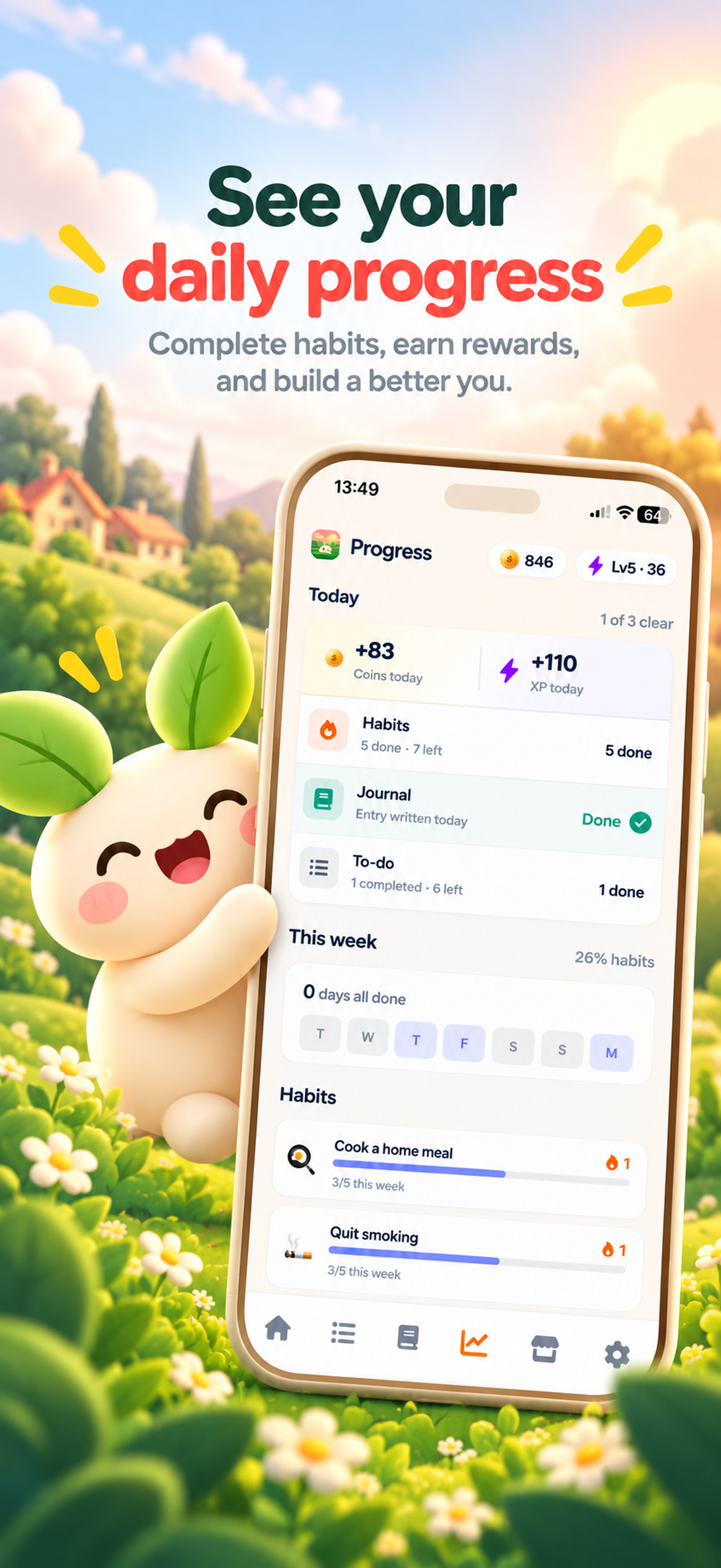
ThrivePal uses deliberately small Level 1 habits and lets users move up a level when it feels easy. You can explore examples by goal in the habit ideas library at /habit-ideas.
Starter menu
- Sleep: no caffeine after 4 PM.
- Movement: walk 10 minutes.
- Strength: 2 push-ups.
- Nutrition: drink 4 glasses of water.
- Mindfulness: meditate 3 minutes.
- Focus: 10-minute focus block.
- Screen time: social media under 3 hours/day.
- Relationships: send one kind message.
- Daily life: tidy one surface.
- Quitting: replace the urge with a 2-minute delay.
Habit-stack line: After I pour my morning coffee, I drink one glass of water.
What progress should feel like week by week
Habit formation is a visible progression, not a countdown. Week 1 is mostly about remembering and reducing friction. Weeks 2–4 are about getting repetitions and surviving imperfect days. Weeks 5–8 are where the habit starts to feel more normal, but skips can still happen. Weeks 9–12 are where many habits become part of the routine, especially if the cue is stable.
Missing once is not failure. The key is returning quickly.
Illustrative 8-week walking habit
- Week 1: walk 10 minutes after lunch on Monday, Wednesday, Friday.
- Week 2: walk 10 minutes after lunch 5 days.
- Week 3: add a weekend walk.
- Week 4: keep the same level and track streaks.
- Week 5: increase to 15 minutes only if 10 feels easy.
- Week 6: choose a backup indoor route.
- Week 7: add a friend or podcast reward.
- Week 8: decide whether to stay at 15 minutes or increase again.
The 30/60/90-day habit plan
Use a plan instead of waiting for motivation.
Days 1–30: choose one habit, one cue, one minimum version, and track every attempt. Do not upgrade too soon. The point is repetition.
Days 31–60: keep the cue. Remove friction. Put the book on your pillow. Keep walking shoes by the door. Set the water bottle on your desk. Add a slightly higher level only if the habit feels easy.
Days 61–90: protect the routine from travel, stress, and schedule changes. Create backup versions so the habit can survive real life.
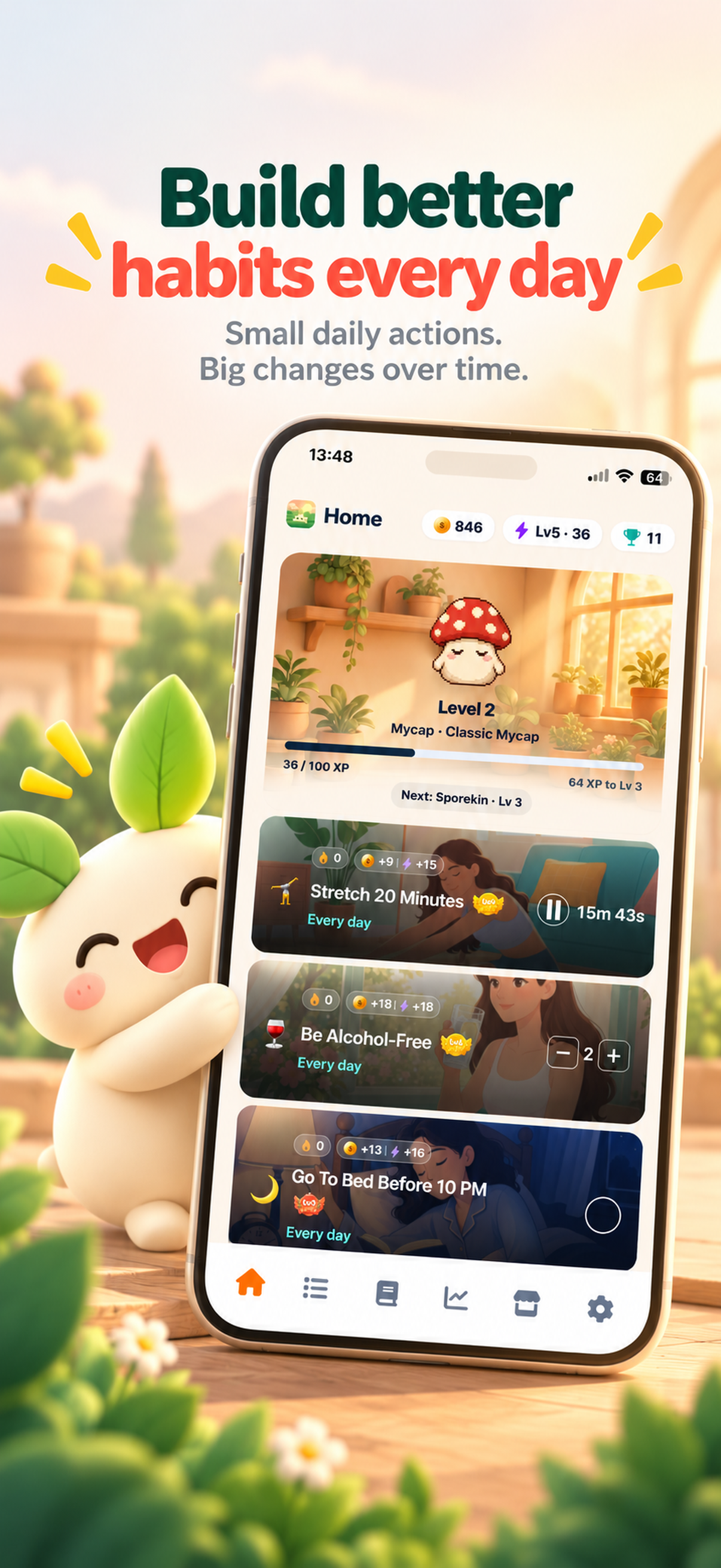
Judge progress by repetition and ease, not perfection. Habit trackers can help by showing daily progress, streaks, reminders, and completed habits. ThrivePal is a habit tracker app for iPhone and Android with check-off, counted, and timed habits, plus reminders and streaks. Learn more at /habit-tracker-app.
30/60/90 worksheet
- Habit: meditate.
- Cue: after I plug in my phone at night.
- Minimum: 3 minutes.
- Reminder: 9:30 PM.
- Tracking rule: check it off immediately after.
- Level-up rule: move to 5 minutes after 10 easy completions.
- Backup rule: if tired, take 3 slow breaths and still mark the tiny version complete.
How to know a habit is actually forming
Look for signs of automaticity:
- You remember it at the cue.
- Starting feels easier.
- Skipping feels noticeable.
- Setup takes less effort.
- You recover after missing.
Do not use streak length as your only measurement. A streak can be motivating, but automaticity is more about reduced mental effort. Review mood, energy, and context. You may find that a habit is easy after lunch but hard after work, or easy on weekdays but fragile on weekends.
ThrivePal includes daily progress, streaks, reminders, a mood journal, a to-do list, badges, achievements, coins, and a companion that grows as users complete habits, journal entries, and to-dos.
Habit formation checklist
- I know exactly when I do it.
- I know the smallest version.
- I have completed it at least 20 times.
- I can do it on a low-energy day.
- I restart within 24 hours after missing.
- I can name the cue without checking my notes.
Score 5–6: forming strongly.
Score 3–4: still stabilizing.
Score 0–2: make it smaller or clearer.
What to do if your habit is not sticking
If a habit is not sticking, redesign it. Do not turn it into self-criticism.
Common reasons habits fail include: the habit is too big, the cue is vague, the environment fights you, the reward is delayed, or you are trying to change too many habits at once.
Use the right tracking style for the behavior. Some habits are simple check-offs. Some are counted, like glasses of water. Some are timed, like focus or meditation. ThrivePal supports check-off, counted, and timed habits, with an optional Pomodoro rhythm for timed habits.
Troubleshooting table
| Problem | Fix |
|---|---|
| I forget | Attach it to an existing cue, e.g., After I brush my teeth, I meditate 3 minutes. |
| It takes too long | Cut it in half. |
| I miss weekends | Create a weekend version. |
| I do well for 5 days then quit | Choose a smaller Level 1 for 14 days. |
| I get distracted during focus time | Use a 10-minute timed session with phone out of reach. |
Worked example: forming a screen-time habit without app blocking
Screen time is a good example because many people want to reduce a habit rather than add one. The goal works best when it replaces a specific moment, not when it vaguely says: use my phone less.
Build a new cue-response loop. For example: mornings start without the phone, or social media ends at a chosen limit. Track the behavior yourself. For more ideas, see /habit-ideas/screen-time or /break-bad-habits-app.
Illustrative 14-day plan
- Days 1–3: 15 phone-free minutes after waking.
- Days 4–7: keep phone outside the bedroom or across the room.
- Days 8–10: add a replacement action, such as drink water and stretch for 2 minutes.
- Days 11–14: track social media under 3 hours/day manually.
Habit-stack line: After I turn off my alarm, I put my phone down and drink water before opening any app.
FAQ
How long does it really take to form a habit?
Many habits start feeling easier within 2–4 weeks. Becoming automatic often takes around 2–3 months, and harder habits can take longer.
Is it true that it takes 21 days to build a habit?
Not usually. The 21-day idea is too simple. A well-known habit study found an average of around 66 days, with wide variation by habit and person.
What happens if I miss one day?
Missing one day does not erase your progress. Restart as soon as possible, ideally within 24 hours, and use a smaller backup version if needed.
What is the fastest way to make a habit automatic?
Make it small, attach it to a clear cue, repeat it often, and reduce friction. A tiny daily habit usually beats a large habit you only do when motivated.
Should I track habits every day?
Tracking helps because it makes progress visible. Track attempts, not just perfect completions, and review what makes the habit easier or harder.