Best Habit App for Building an Evening Wind Down Routine
Find the best habit app for building an evening wind-down routine. Follow our step-by-step setup, tiny Level 1 habits, and a realistic 7-day action plan.
The best habit app for building an evening wind down routine is one that removes late-night decision fatigue through tiny starting habits, timely cues, and immediate, rewarding feedback. Instead of demanding a rigid two-hour ritual when your willpower is lowest, an effective tracker guides you through small, realistic actions you can finish even on an exhausting evening. By replacing passive screen scrolling with clear micro-steps, you prepare your mind and body for deep rest.
Most adults need 7 or more hours of sleep, yet the hours leading up to bed are often when good intentions unravel. Choosing a tracker like ThrivePal helps turn bedtime into a structured, low-stress transition rather than an uphill battle against exhaustion.
Why Evening Routines Fail (And How a Habit App Fixes It)
Most evening routines do not fail from a lack of desire. They fail because your brain runs out of cognitive energy at night. After a long day of making decisions, your ability to enforce complex rules drops significantly.
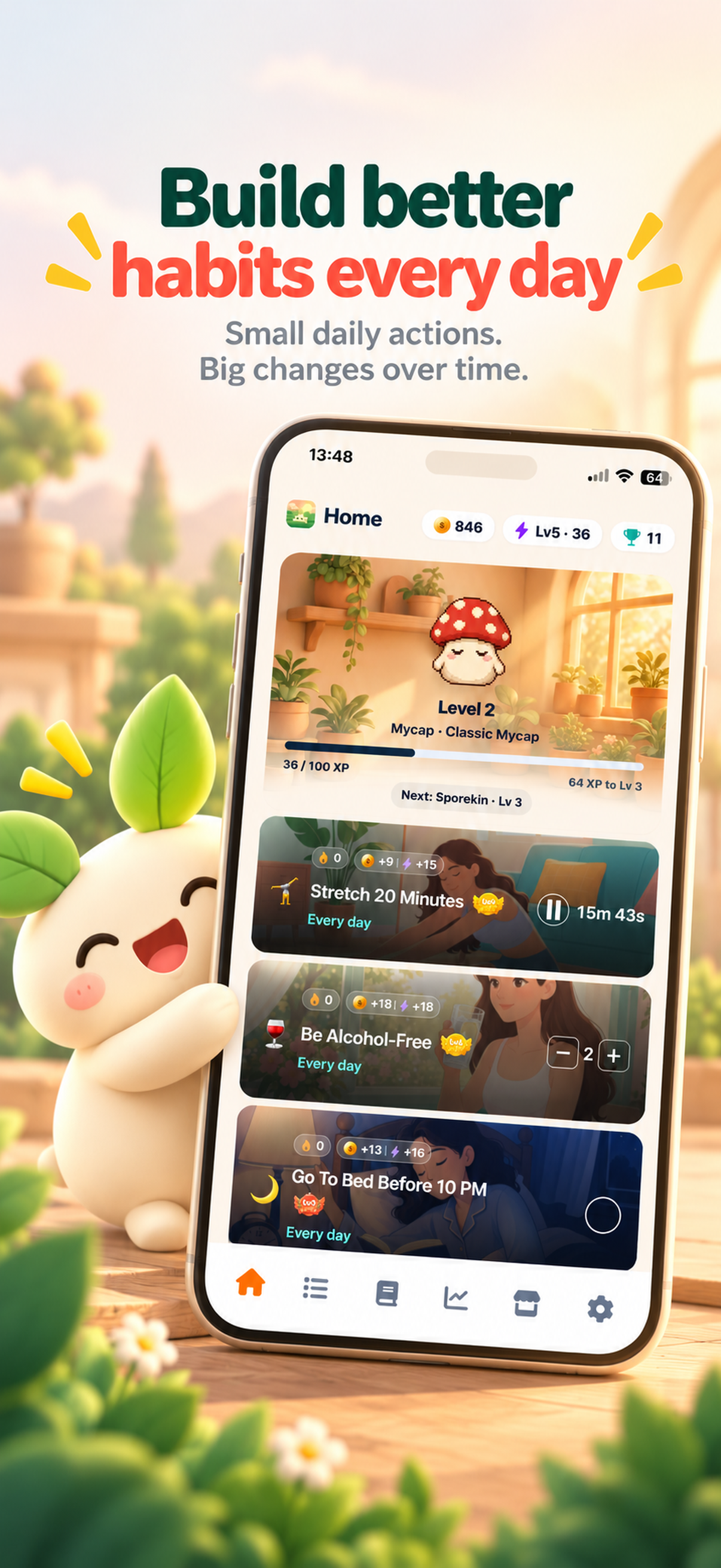
Bedtime routines typically collapse under three common traps:
- Decision fatigue: Standing in the kitchen at 9:30 PM wondering whether you should stretch, read, prepare tomorrow's clothes, or just watch television.
- Overambitious goals: Attempting a 90-minute self-care ritual on a night when you barely have the energy to wash your face.
- Revenge bedtime procrastination: Reaching for endless phone feeds because scrolling offers easy, effortless dopamine to close out a tiring day.
A dedicated habit tracker app fixes this dynamic by acting as an external brain. It provides an unmistakable sequence of low-friction cues and clear feedback so you don't have to rely on willpower at night. By keeping the first step tiny, you avoid the resistance that makes you stay on the couch until midnight.
Checklist: 4 Evening Routine Pitfalls vs App-Based Solutions
- Pitfall 1: Overcomplicated checklists. App solution: Focus on Level 1 micro-habits that take 2 to 10 minutes to finish.
- Pitfall 2: Forgetting when to start. App solution: Gentle pre-bed reminders scheduled 30–60 minutes before your head hits the pillow.
- Pitfall 3: Late-night phone doomscrolling. App solution: Visual rewards like coins and leveling companions that give an intentional sense of closure instead of mindless browsing.
- Pitfall 4: All-or-nothing thinking. App solution: Streak protection and daily progress bars that value showing up for one small action over perfection.
Key Features to Look For in a Wind-Down Routine App
Not every habit app is well-suited for night-time routines. Many are built around aggressive productivity dashboards with harsh streak penalties that spike stress right when you need to relax. A good wind-down tracker needs gentle, supportive mechanics.
First, look for flexible tracking modes. Check-off habits work well for simple yes/no items like laying out tomorrow's clothes or setting an alarm. Timed habits work better for activities that require pacing, such as reading or breathwork. Some apps provide an optional Pomodoro rhythm or simple timers that ring quietly when a session finishes, letting you read without watching the clock.
Second, look for evening-specific reminders. A notification that pops up when you are already in bed is useless. You need a cue scheduled for when the wind-down begins, breaking the trance of evening chores or television.
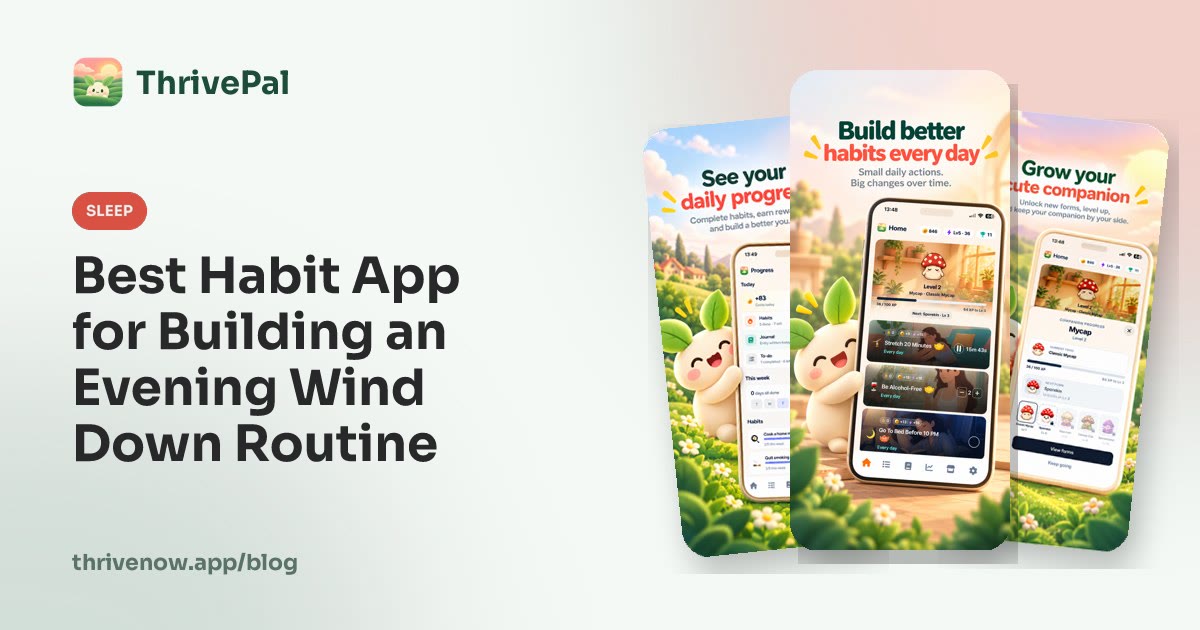
Third, consider the reward structure. If your default bedtime habit is checking social feeds for quick amusement, checking off an empty box on a stark checklist will not feel satisfying. Gamified apps reward you with coins, companion level-ups, or badges. Completing your night-time habits helps your companion grow and unlocks new forms, creating a healthy alternative loop for your brain.
A note on phone boundaries: ThrivePal is available for iPhone and Android, but it does NOT block apps or measure screen time automatically. Screen time and digital boundaries are tracked by the user. This intentional check-in keeps you actively aware of your evening habits without relying on intrusive, passive trackers that are easy to bypass.
Feature evaluation checklist for evening habit tracker apps
| Feature | Why It Matters for Night Routines | Essential vs Optional |
|---|---|---|
| Timed Habits | Lets you read or meditate without checking the clock | Essential |
| Simple Check-Offs | Clears mental clutter with quick completion | Essential |
| Evening Reminders | Signals the routine kickoff before fatigue takes over | Essential |
| Visual Rewards / Companion | Replaces late-night social scrolling loops | Highly Recommended |
| Mood Journaling | Provides a brain dump space to quiet racing thoughts | Highly Recommended |
| Tiny Starter Levels | Keeps habits doable even on low-energy evenings | Essential |
Choosing Your Micro-Habits: The Level 1 Starter Menu
A common mistake is loading a tracker with five brand-new, strenuous habits at once. When building a night-time wind-down, start with Level 1 habits that take less than 10 minutes. In ThrivePal, there are 54 habits across 10 areas of life: sleep, movement, strength, nutrition, mindfulness, focus, digital habits, relationships, everyday life and quitting.
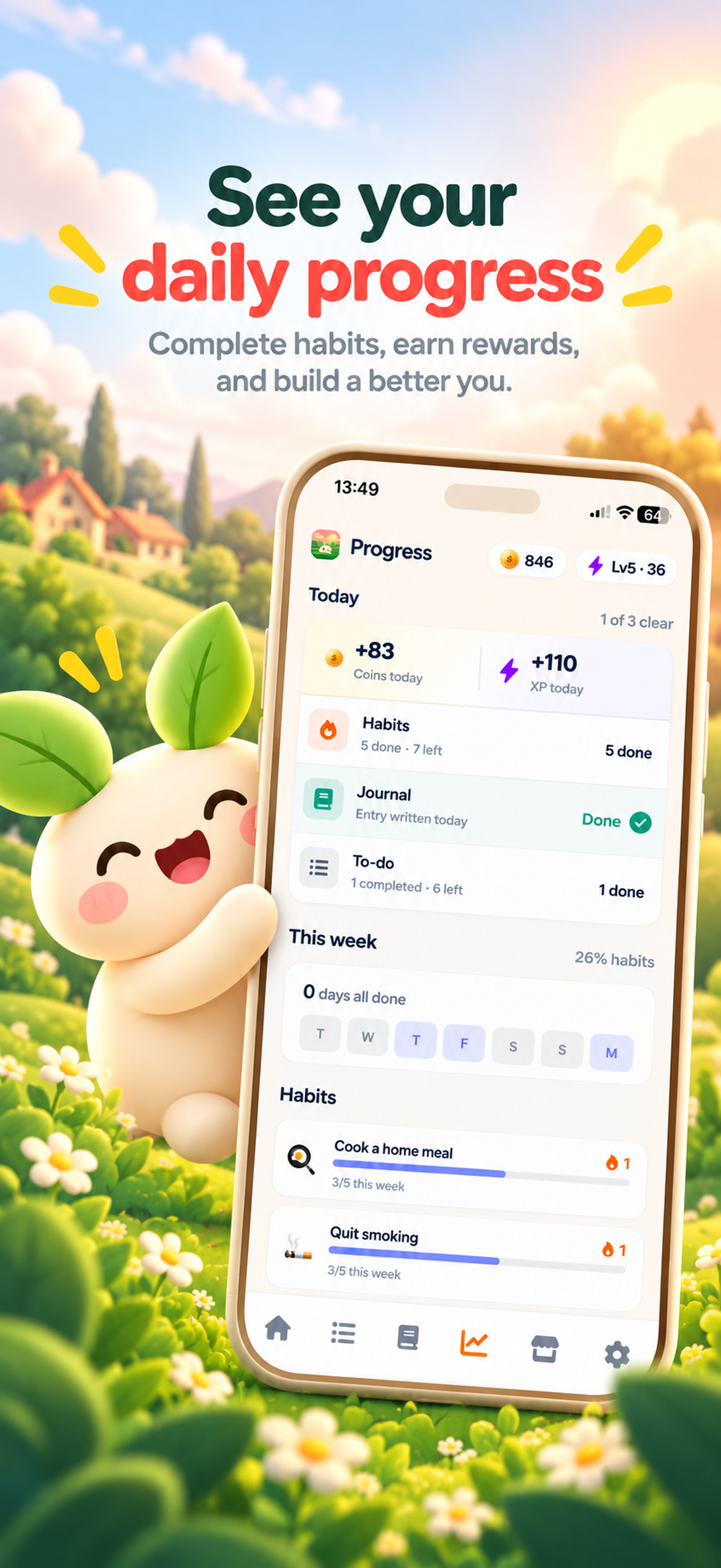
Each habit has up to 5 levels. Level 1 is deliberately small. It should feel almost effortless. You only move up a level when the starter habit feels completely natural for several weeks.
Here are balanced Level 1 habits specifically chosen for an evening wind-down routine:
Level 1 Habit Starter Menu
- No caffeine after 4 PM (quitting): Tracked as a check-off. Eliminating late stimulants protects your sleep architecture. (If you are changing your diet, quitting substances, or managing health conditions, talk to a doctor.)
- Gratitude 2 minutes (mindfulness): Tracked by time or check-off. Jotting down three simple things in the app's mood journal switches your nervous system out of work mode.
- Read 10 minutes (focus): Tracked with a gentle timer. A brief chapter in a print book or e-reader slows down active thinking.
- Meditate 3 minutes (mindfulness): Tracked with a quiet timer. Simple slow breaths relax the body before bed.
- Tidy bedroom surface 2 minutes (everyday life): Tracked as a check-off. Clearing your nightstand removes visual clutter that signals unfinished tasks.
By keeping these steps tiny, you avoid bedtime resistance. You can see more ideas on our sleep habit ideas page.
A Sample 60-Minute Evening Wind-Down Timeline
To make your routine automatic, link your actions in chronological order using habit stacking examples. Habit stacking pairs an existing action (like washing dinner dishes or brushing your teeth) with your new habit, giving the app's cue a clear physical anchor.
Here is an illustrative 60-minute wind-down timeline that balances check-offs and timed habits between 8:30 PM and 9:30 PM:
8:30 PM – The Digital Boundary Anchor
- Anchor: After I finish the dinner dishes, I will check off no caffeine after 4 PM in my tracker and put my phone on its nightstand charger.
- Tracking style: Check-off habit.
- Duration: 1 minute.
8:45 PM – The Physical Transition Anchor
- Anchor: After I brush my teeth and wash my face, I will clear my bedside table and set out tomorrow's clothes.
- Tracking style: Check-off habit (everyday life).
- Duration: 5 minutes.
9:00 PM – The Mind Unload Anchor
- Anchor: After I sit on the edge of the bed, I will open the app's mood journal and complete gratitude 2 minutes.
- Tracking style: Timed habit.
- Duration: 2 minutes.
9:05 PM – The Mental Slowdown Anchor
- Anchor: After I close the journal, I will tap start on read 10 minutes in my tracker and pick up my book.
- Tracking style: Timed habit.
- Duration: 10 minutes.
9:20 PM – The Sleep Induction Anchor
- Anchor: After I close my book, I will start meditate 3 minutes and focus on long exhales.
- Tracking style: Timed habit.
- Duration: 3 minutes.
9:25 PM – Lights Out
- Check off today's completed routine, watch your daily progress bar fill, and rest.
Setting Up Your Evening Routine in ThrivePal
Setting up your routine in an app should take less than five minutes. If you want a complete walkthrough of configuring an app from scratch, take a look at our habit tracker app guide.
Here is an illustrative worked example showing how to set up a 3-habit evening wind-down in ThrivePal on iPhone or Android:
Step 1: Complete Onboarding and Pick Starter Habits
Download ThrivePal for free. The initial onboarding asks a few short questions about your daily focus areas. From the suggested list, pick three habits to start:
- No caffeine after 4 PM (from the quitting category)
- Gratitude 2 minutes (from the mindfulness category)
- Read 10 minutes (from the focus category)
Make sure each habit is set to Level 1.
Step 2: Configure Reminders and Tracking Modes
Tap each habit to confirm its tracking style. Set no caffeine after 4 PM as a daily check-off habit. Set gratitude 2 minutes and read 10 minutes as timed habits. Add an evening reminder for 8:30 PM labeled "Start evening wind-down." This notification brings your focus back to your routine before fatigue sets in.
Step 3: Check In Daily to Earn Rewards and Grow Your Companion
Each night, complete your habits and write a brief entry in the built-in mood journal. Completing habits, to-dos, and journal entries earns coins and grows your virtual companion. As your companion levels up, it unlocks new forms, and you can spend earned coins on outfits and scenes in the shop. Your character traits grow alongside the habits you maintain, giving you visible, satisfying feedback to end the night.
The 7-Day Evening Wind-Down Action Plan
Treat your first week as a testing period. Do not try to be perfect. The goal of the next 7 days is simply to practice showing up to your wind-down cues and logging them in the app. For more setup strategies, review how to build a habit that sticks in 14 days.
Day-by-Day Implementation Matrix (Days 1–7)
- Day 1: Setup and baseline. Download the app, choose three Level 1 evening habits, and set your 8:30 PM reminder. Put your phone on charge when the reminder sounds.
- Day 2: Test the habit stack. Anchor your first timed habit directly after brushing your teeth. Keep your reading or mindfulness session under 5 minutes.
- Day 3: Check the friction. Did you feel resistance? If reading 10 minutes felt too long, reduce it to 5 minutes. The starting habit must feel almost too easy.
- Day 4: Use the mood journal. Spend 60 seconds jotting down racing thoughts or tomorrow's to-dos in the app before putting the phone away.
- Day 5: Treat misses as data. If you stayed on social media past your reminder, do not abandon the tracker. Log what you did honestly and check off your companion's status tomorrow.
- Day 6: Review rewards and streaks. Check your streak counter and visit the shop. See how many coins you have earned toward your companion's next outfit or form.
- Day 7: Weekly review. Look at your 7-day progress. If all three habits felt easy, keep them at Level 1 for another week before considering Level 2. Consistency matters more than speed.
Building a relaxing evening routine does not require endless willpower. By choosing a habit app that prioritizes micro-habits, gentle timers, and visual progress, you can turn your evenings into a peaceful, repeatable close to every day.
FAQ
What is a realistic evening wind-down routine for busy people?
A realistic routine takes 15 to 30 minutes total and consists of only 2 or 3 tiny steps. For example: setting out tomorrow's clothes (2 minutes), writing down three things you are grateful for (2 minutes), and reading in bed (10 minutes). Starting small ensures you can finish the routine even when you are exhausted.
How long before bed should I start my evening routine?
Most people benefit from starting their wind-down 30 to 60 minutes before their target sleep time. This provides enough buffer to finish hygiene tasks, disconnect from work screens, and allow your heart rate and mental activity to slow down naturally.
Can a habit tracker app help reduce screen time before bed?
Yes. An evening habit tracker replaces passive scrolling with structured, rewarding micro-habits like reading, journaling, or meditation. Gamified elements—such as earning coins or leveling up a companion—provide an engaging reward loop that makes putting the phone down feel satisfying.
Does ThrivePal block apps automatically during my wind-down time?
No. ThrivePal does not block apps or measure screen time automatically. Digital habit boundaries in ThrivePal are tracked intentionally by the user. This approach encourages mindful awareness of your device habits rather than relying on technical blocks that can easily be overridden.