Habit Stacking Examples You Can Copy Today
Copy practical habit stacking examples for mornings, work, health, mindfulness, screen time, and a simple one-week setup plan.
Habit stacking means attaching a new behavior to something you already do, so your routine carries the new habit for you. The easiest examples look like this: after I brush my teeth, I read for 10 minutes; after I pour coffee, I drink water; after I open my laptop, I write my top task.
Use the examples below as copy-and-paste starting points. Keep the first version tiny. You can always build later.
What habit stacking is, in one usable formula
Habit stacking is the practice of attaching a new behavior to an action that already happens automatically.
Use this line:
After I [current habit], I will [new tiny habit].
The current habit is the anchor. Good anchors already happen most days, such as:
- Pouring coffee or tea
- Brushing your teeth
- Sitting at your desk
- Plugging in your phone
- Getting into bed
- Starting the shower
- Closing your laptop
The new habit should start almost comically small. That is the point. A tiny habit can survive busy days, low-energy days, travel days, and imperfect days.
For example, ThrivePal habits start with deliberately small Level 1 actions, such as walking 10 minutes, reading 10 minutes, doing 2 push-ups, drinking 4 glasses of water, meditating 3 minutes, or writing gratitude for 2 minutes. You move up only when the current level feels easy.
Habit-stacking template:
After I [anchor I already do], I will [tiny action for 1–10 minutes], then I will [mark it done / count it / time it].
Example: After I brush my teeth at night, I will read for 10 minutes, then check off reading in my habit tracker.
Morning habit stacking examples
Morning stacks work best when they remove friction. Do not build a 12-step morning routine on day one. Pick one keystone morning stack first, then add more only when it feels automatic.
Anchor: waking up
- 30 seconds: After I turn off my alarm, I drink three sips of water.
- 3 minutes: After I get out of bed, I open the curtains and stretch.
- 10 minutes: After I make the bed, I walk outside or around the block.
Anchor: bathroom routine
- 30 seconds: After I brush my teeth, I do one deep breath.
- 3 minutes: After I wash my face, I meditate for 3 minutes.
- 10 minutes: After I finish in the bathroom, I read 10 minutes before checking my phone.
Anchor: coffee or tea
- 30 seconds: After I pour coffee, I fill a glass of water.
- 3 minutes: After I start the kettle, I write one thing I need to do today.
- 10 minutes: After I sit with coffee, I plan my first focused work block.
Anchor: breakfast, getting dressed, or opening laptop
- After I sit down for breakfast, I keep my phone away for 15 minutes.
- After I get dressed, I pack one healthy snack.
- After I open my laptop, I set a 25-minute focus timer.
Illustrative morning routine: 7:00 wake up → after I turn off my alarm, I drink water; 7:05 after I brush my teeth, I do 2 push-ups; 7:15 after I pour coffee, I write one to-do; 7:30 after I sit down to eat, I keep my phone away for 15 minutes; 9:00 after I open my laptop, I set a 25-minute focus timer.
Workday and focus habit stacking examples
A good work stack makes the next action obvious. It should not require a planning session before you begin.
Try these workplace anchors:
- After I open my laptop, I write my top 1 task on a sticky note.
- After I check email once, I start a 25-minute focus timer.
- After I join a meeting, I write the goal of the meeting at the top of my notes.
- After I finish a meeting, I write the next action before opening another tab.
- After I send an important email, I stand up and relax my shoulders.
- After I return from lunch, I walk for 10 minutes or stretch for 2 minutes.
- After I close my laptop, I clear my desk for tomorrow.
Timed habits work well here. A Pomodoro-style block gives your brain a clear start and stop. You can track focused work by time, then check off small support habits such as desk reset, phone-away time, or writing the next action.
Workday stack menu: after I open my laptop, I write the top 1 task on a sticky note; after I check email once, I start a 25-minute focus timer; after I finish a meeting, I write the next action before opening another tab; after I return from lunch, I walk for 10 minutes or stretch for 2 minutes; after I close my laptop, I clear my desk for tomorrow.
Health habit stacking examples: movement, strength, sleep, and nutrition
Health stacks are easier when you attach them to meals, showering, commuting, changing clothes, and bedtime. Start with the smallest useful version. Scale only when it feels easy.
Movement
- After I put on shoes, I walk for 10 minutes.
- After I park, I walk one extra loop before going inside.
- After I finish lunch, I take a short walk before returning to my desk.
Strength
- After I start the shower, I do 2 push-ups while the water warms.
- After I change into comfortable clothes, I do one set of squats.
- After I put my gym bag by the door, I do one easy mobility move.
Fuel
- After I sit down for lunch, I eat one fruit or vegetable first.
- After I fill my coffee cup in the afternoon, I also fill a water bottle.
- After I clean the kitchen at night, I set out tomorrow’s breakfast.
Sleep
Most adults need 7 or more hours of sleep. If sleep is a focus, make the stack calming, not ambitious.
- After I plug in my phone at night, I begin my bedtime wind-down.
- After I brush my teeth, I dim the lights.
- After I get into bed, I read 10 minutes instead of scrolling.
ThrivePal includes habits across sleep, movement, strength and nutrition, with levels users can move up when ready. You can also browse more ideas by area, such as /habit-ideas/exercise or /habit-ideas/sleep.
Health stacks to copy: after I put on shoes, I walk for 10 minutes; after I start the shower, I do 2 push-ups while the water warms; after I sit down for lunch, I eat one fruit or vegetable first; after I fill my coffee cup in the afternoon, I also fill a water bottle; after I clean the kitchen at night, I set out tomorrow’s breakfast; after I plug in my phone at night, I begin my bedtime wind-down.
Mindfulness, mood, and relationship habit stacking examples
Habit stacking is not only for productivity and fitness. It also works for emotional health and relationships because small moments repeat every day.
Try tiny commitments:
- After I sit down with my first drink of the day, I meditate for 3 minutes.
- After I close my laptop, I write one sentence in a mood journal.
- After I arrive home, I take three breaths before starting the next thing.
- After I start dinner, I send one kind text.
- After I sit down with a partner or roommate, I ask one real question before looking at my phone.
- After I say goodnight, I put my phone away.
- After I get into bed, I write one thing I’m grateful for for 2 minutes.
Social habits work best when tied to transitions: arriving home, starting dinner, texting someone, or saying goodnight. That way they feel like part of the day, not one more task.
Mind and people stack examples: after I sit down with my first drink of the day, I meditate for 3 minutes; after I close my laptop, I write one sentence in a mood journal; after I start dinner, I send one kind text; after I sit down with a partner or roommate, I ask one real question before looking at my phone; after I get into bed, I write one thing I’m grateful for for 2 minutes.
Habit stacking examples for reducing screen time and quitting bad habits
Habit stacks can replace a cue, not just add a positive habit. This is useful for phone checking, social media, caffeine timing, late-night scrolling, and impulse habits.
Use if-then replacement stacks for risky moments:
- After I put my phone down to charge, I read for 10 minutes.
- After I feel the urge to open social media, I take 3 breaths and stand up first.
- After I pour my last coffee of the day, I set a no-caffeine-after-4-PM rule for the rest of the day.
- After I get into bed, my phone stays across the room.
- After I sit on the couch, I choose the show before I open any app.
- After I check my daily screen-time estimate, I mark whether I stayed under my chosen limit.
For smoking, alcohol, vaping, major diet changes, or health conditions, talk to a doctor or qualified professional. A habit stack can support change, but it is not medical care. Screen-time limits are self-tracked by the user. For more ideas, see /habit-ideas/screen-time or /habit-ideas/quit.
Replacement stack examples: after I put my phone down to charge, I read for 10 minutes; after I feel the urge to open social media, I take 3 breaths and stand up first; after I pour my last coffee of the day, I set a no-caffeine-after-4-PM rule for the rest of the day; after I get into bed, my phone stays across the room; after I check my daily screen-time estimate, I mark whether I stayed under my chosen limit.
How to build your first habit stack in one week
The mistake is choosing too many habits at once. For your first week, choose one anchor, one tiny habit, one tracking method, and one review point.
One-week plan:
- Day 1: Choose one anchor that already happens daily.
- Day 2: Write one stack line.
- Day 3: Do the habit at Level 1 only.
- Day 4: Add a reminder if you forgot.
- Day 5: Track it by check-off, count, or timer.
- Day 6: Review what got in the way.
- Day 7: Either keep the same tiny level for another week or add one more stack only if the first feels easy.
If the stack is not working, troubleshoot without blaming yourself:
- Make the action smaller.
- Change the anchor.
- Move it to a better time.
- Put the tool in sight.
- Remove one step of friction.
A habit can be checked off, counted, or timed depending on the behavior. Use check-off for yes/no actions, count for repeatable actions, and a timer for reading, walking, meditation, or focus blocks.
How to track habit stacks without making them complicated
Tracking should reinforce the stack, not become the main chore. If your tracker takes longer than the habit, simplify it.
Tracking checklist:
- Is the habit done or not? Use check-off.
- Does it repeat, like glasses of water or push-ups? Use count.
- Does it last for a set period, like reading, walking, meditating, or focus? Use a timer.
- Did you miss twice? Shrink the habit before you add a new one.
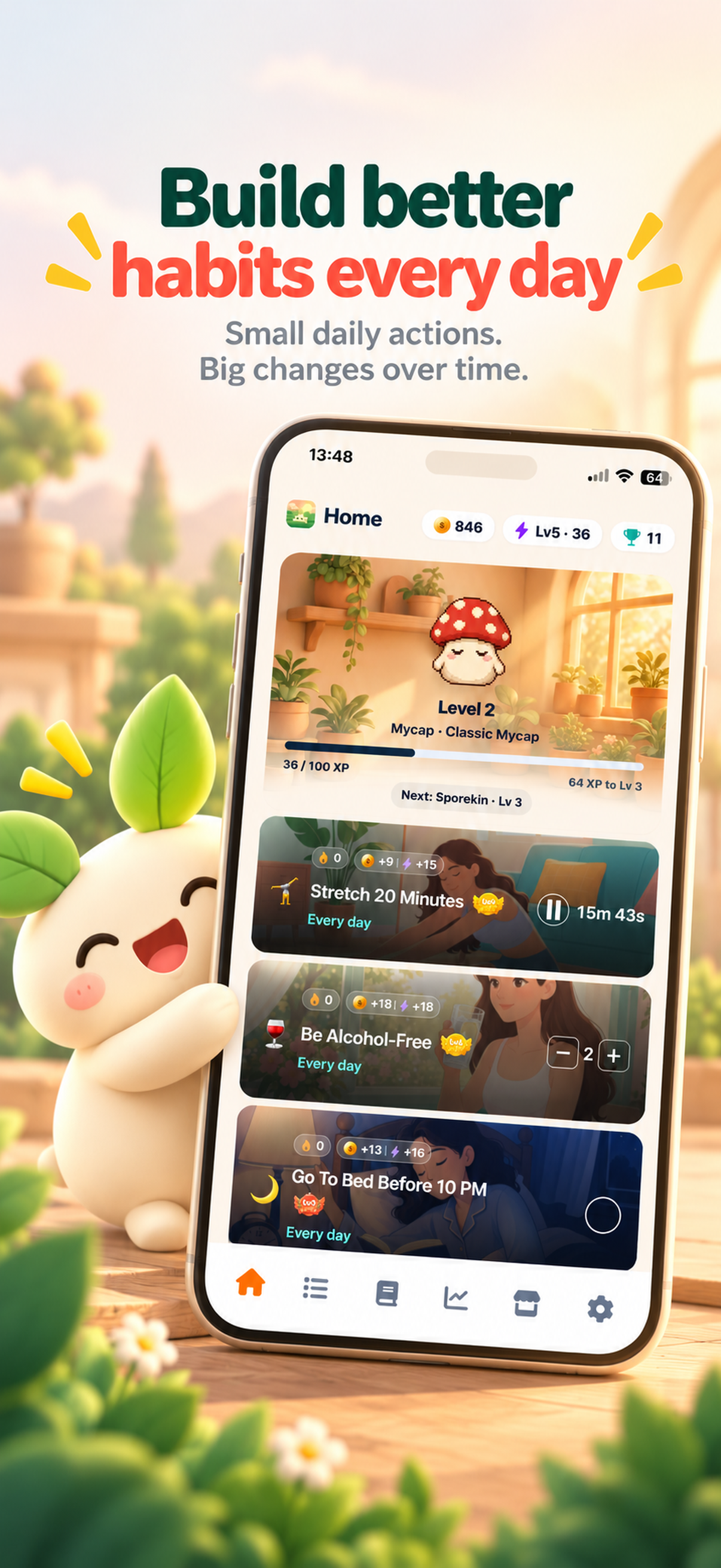
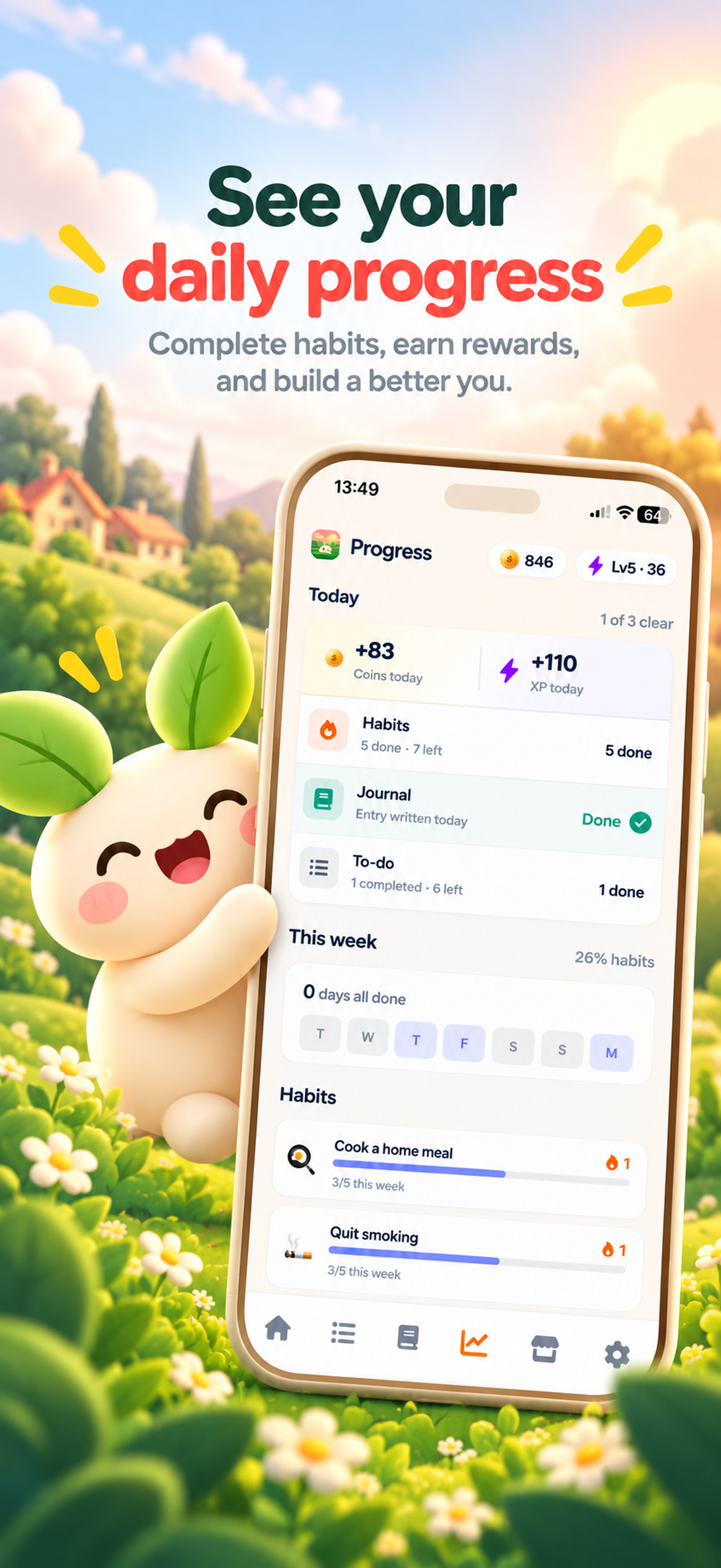
Rewards can help maintain momentum, but they should not require a huge setup. In ThrivePal, completing habits, journal entries, and to-dos earns coins and grows a companion. Coins can be used for companions, outfits, and scenes. The app also includes streaks, milestones, badges, achievements, traits, reminders, daily progress, a mood journal, and a to-do list. Habits can be checked off, counted, or timed, and timed habits have an optional Pomodoro rhythm.
Use this simple leveling rule: only increase difficulty when the current level feels easy. If 10 minutes of walking happens most days without drama, then consider 15 or 20. If 2 push-ups feels automatic, add a few more. If the routine starts to feel heavy, shrink it again.
FAQ
What are 5 examples of habit stacking?
After I brush my teeth, I read for 10 minutes. After I pour coffee, I drink water. After I open my laptop, I write my top task. After I start the shower, I do 2 push-ups. After I get into bed, I write one thing I’m grateful for.
What is the best habit stacking formula?
Use: After I [current habit], I will [tiny new habit]. Add tracking if helpful: then I will check it off, count it, or time it.
How many habits should I stack at once?
Start with one. Add another only when the first stack feels easy and happens most days.
What should I do if my habit stack is not working?
Make the action smaller, choose a stronger anchor, move it to a better time, or add a reminder. Missing days is normal; use the miss as information.
Should I track habit stacks in a habit tracker app?
Yes, if it keeps the habit visible and simple. Track yes/no habits with a check-off, repeatable habits with a count, and duration habits with a timer.