Habit Tracker Ideas You Can Start Today
Practical habit tracker ideas by goal, with tiny starter versions, tracking styles, and a 7-day setup you can copy today.
The best habit tracker ideas are small, clear, and trackable today. Instead of writing broad goals like get healthier or be productive, choose one tiny action, decide how you will track it, and repeat it for a week before adding more.
Use this guide to pick practical habits by life area. Each idea has a starter version, a tracking style, and a real moment where it can fit.
Start here: choose habit tracker ideas you will actually use
A good tracker habit passes three tests: it is small enough to do on a normal busy day, clear enough that you know when it is done, and trackable today.
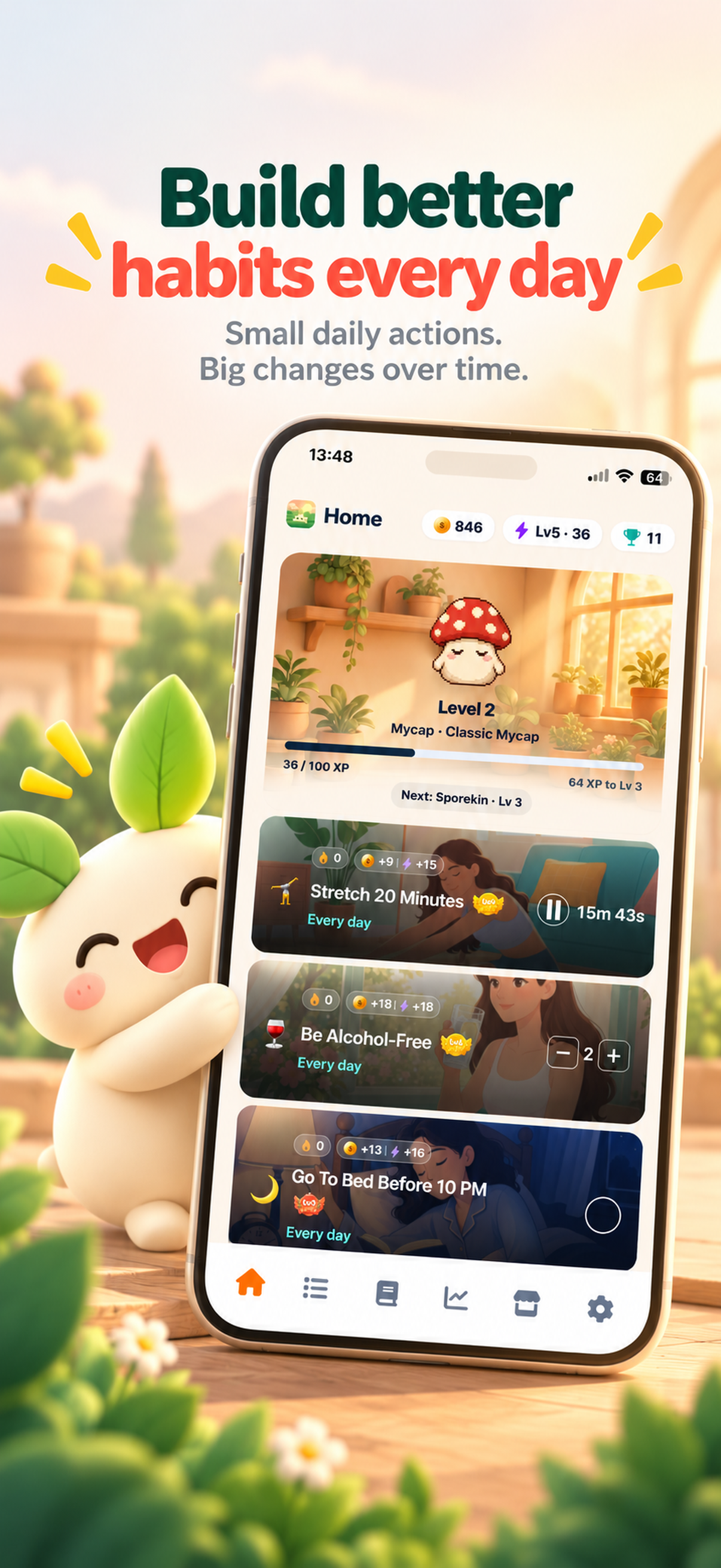
There are three simple tracking styles:
- Check off: best for yes/no habits. Example: no caffeine after 4 PM.
- Count: best for repetitions, servings, glasses, pages, or messages. Example: 4 glasses of water.
- Time: best for minutes spent. Example: walk 10 minutes.
Start with 3–5 habits, not 20. A tracker should make your day feel clearer, not heavier. If you add too many habits at once, the tracker becomes another chore.
ThrivePal has 54 habits across 10 areas of life: sleep, movement, strength, nutrition, mindfulness, focus, digital habits, relationships, everyday life and quitting. Each habit has up to 5 levels, and level 1 is deliberately small. It should feel almost too easy. Move up only when the current level feels easy.
Starter checklist:
- Pick one life area that matters this week.
- Choose one tiny habit.
- Decide: check off, count, or time.
- Attach it to a real moment in the day.
- Track it for 7 days before adding more.
Illustrative example: Goal = better energy. Habit = walk 10 minutes. Tracking = timed. Cue = after lunch.
Sleep habit tracker ideas
Sleep habits work best when they target the routine around sleep, not the vague goal of sleep better. Start with winding down, waking up, caffeine boundaries, and bedroom routines. For more examples, see the sleep habit ideas page.
Good starter sleep habits include:
- Put your phone on charge outside arm’s reach, check off.
- No caffeine after 4 PM, check off.
- Read for 10 minutes before bed, timed.
- Set clothes out for tomorrow, check off.
- Open curtains within 10 minutes of waking, timed or check off.
- Count how many nights you start your wind-down before a set time, count.
Sleep habits also pair well with digital habits. A short phone-free period before bed or after waking can make the routine easier to protect.
Sample sleep routine:
- 9:30 PM — set clothes out for tomorrow, check off.
- 9:45 PM — no caffeine after 4 PM, check off.
- 10:00 PM — 10-minute wind-down stretch or reading, timed.
- 10:20 PM — lights out routine, check off.
Starter habit stack: After I brush my teeth at night, I put my phone on charge outside arm’s reach.
Movement, strength, and nutrition habit tracker ideas
Movement and strength are not the same. Movement can be a walk, stretch, bike ride, or short mobility break. Strength can be a tiny set at home or a full gym session. Separating them helps you avoid the all-or-nothing feeling that exercise must mean a hard workout.
For more body-based ideas, browse exercise habit ideas, strength, and nutrition pages.
Movement ideas:
- Walk 10 minutes after lunch, timed.
- Stretch for 5 minutes after work, timed.
- Take the stairs once, count.
- Stand up once each hour during work, count.
Strength ideas:
- Do 2 push-ups after getting dressed, count.
- Do one set of squats before your shower, count.
- Pack gym clothes the night before, check off.
- Complete one planned gym exercise, check off or count.
Nutrition ideas:
- Drink 4 glasses of water by dinner, count.
- Add one fruit or vegetable to lunch, check off.
- Pack one snack before leaving home, check off.
- Refill your water bottle twice, count.
Mini menu of starter habits: movement — walk 10 minutes after lunch, timed; strength — 2 push-ups after getting dressed, count; nutrition — 4 glasses of water by dinner, count; meal support — pack one snack before leaving home, check off.
Illustrative 3-day starter: Monday walk 10 minutes, Wednesday 2 push-ups, Friday refill water bottle twice.
Mindfulness and focus habit tracker ideas
Mindfulness and focus habits do not need a perfect morning routine. They need a clear start point and a small finish line.
Starter mindfulness ideas:
- Meditate 3 minutes, timed.
- Gratitude 2 minutes, timed.
- Write one sentence in a mood journal, check off.
- Take three slow breaths before opening email, count or check off.
Starter focus ideas:
- Choose one task before checking messages, check off.
- Read 10 minutes, timed.
- Clear one small admin task, check off.
- Work on one study topic for 25 minutes, timed.
Timed habits can use an optional Pomodoro rhythm in ThrivePal. That works well for work, study, home admin, reading, or any task where you want a clean start and stop.
Sample focus block:
- 8:55 AM — choose one task, check off.
- 9:00–9:25 AM — focus session, timed with Pomodoro rhythm if desired.
- 9:25–9:30 AM — quick break.
- 9:30 AM — record one sentence in mood journal.
Habit stack: After I open my laptop, I write the one task I will finish before checking messages.
Digital habits and screen-time tracker ideas
Digital habits are about the behavior you choose to track. ThrivePal does not block apps or measure screen time; screen time habits are tracked by the user. If you want ideas for changing phone use, see the reduce screen time app page.
Starter digital habits include:
- 15 phone-free minutes in the morning, timed.
- Social media under 3 hours a day, check off manually.
- Place phone away during dinner, check off.
- One intentional scroll window, timed.
- Turn off one nonessential notification, check off.
- Stop streaming after one episode, count or check off.
- End gaming at a planned time, check off.
Use digital habits as boundaries, not punishments. A clear window is easier to track than a vague promise to use your phone less.
Phone-use starter plan:
- Morning — 15 phone-free minutes after waking, timed.
- Workday — social media under 3 hours a day, check off manually.
- Evening — place phone away during dinner, check off.
- Weekend — one 30-minute intentional scroll window, timed.
Habit stack: After I turn off my alarm, I put my phone down and drink water before opening any app.
Relationships and everyday life habit tracker ideas
Habit tracking is not only for health or productivity. You can track small actions that make life feel more supported: connection, chores, planning, errands, and small acts of care.
Relationship habits work best when they are paired with something you already do. For example, send a message during lunch, ask one question at dinner, or put your phone away when someone starts talking.
Starter ideas:
- Send one thoughtful message, check off.
- Ask one person how their day is going, count.
- Plan one shared activity, check off.
- Make the bed, check off.
- Reset one surface, timed.
- Do a 5-minute kitchen reset, timed.
- Write tomorrow’s top 3 to-dos, count or check off.
Everyday-life + relationship routine:
- 7:30 AM — make bed, check off.
- 12:30 PM — send one kind text, check off.
- 6:30 PM — 5-minute kitchen reset, timed.
- 8:00 PM — write tomorrow’s top 3 to-dos, count or check off.
Worked example: If someone wants a tidier home but feels overwhelmed, their first habit is not clean the house; it is clear one counter for 3 minutes after dinner.
Quitting habit tracker ideas: replace, reduce, and recover
Quitting habits often need two tracker items: the behavior to avoid and the replacement action. This keeps the plan practical. You are not just saying no; you are giving yourself a next step.
Examples include no caffeine after 4 PM, avoiding late-night snacking, limiting impulse shopping, or reducing alcohol on weekdays. If you are changing smoking, alcohol, vaping, medication, or a health-related diet pattern, talk to a doctor or qualified health professional.
Quitting habits also need a missed-day recovery plan. A miss does not mean restarting from zero. It means the next choice matters.
For more support, see the break bad habits app page.
Illustrative quitting plan:
Goal = reduce evening caffeine.
- Track 1 — no caffeine after 4 PM, check off.
- Track 2 — make herbal tea after dinner, check off.
- Track 3 — note craving in mood journal, 1 sentence.
If missed: next-day rescue checklist = identify time, choose replacement drink, set reminder for 3:45 PM.
A balanced 7-day habit tracker setup you can copy
If you want to start today, copy the setup below and keep every habit at level 1 for one week. Do not raise the difficulty until the habit feels easy.
This set balances body, mind, digital life, relationships, and daily maintenance:
- Sleep: no caffeine after 4 PM, check off.
- Movement: walk 10 minutes, timed.
- Strength: 2 push-ups, count.
- Nutrition: 4 glasses of water, count.
- Mindfulness: gratitude 2 minutes, timed.
- Digital habits: 15 phone-free minutes in the morning, timed.
- Relationships: send one thoughtful message, check off.
Suggested rule: keep all 7 at level 1 for one week, then only increase the habits that feel easy.
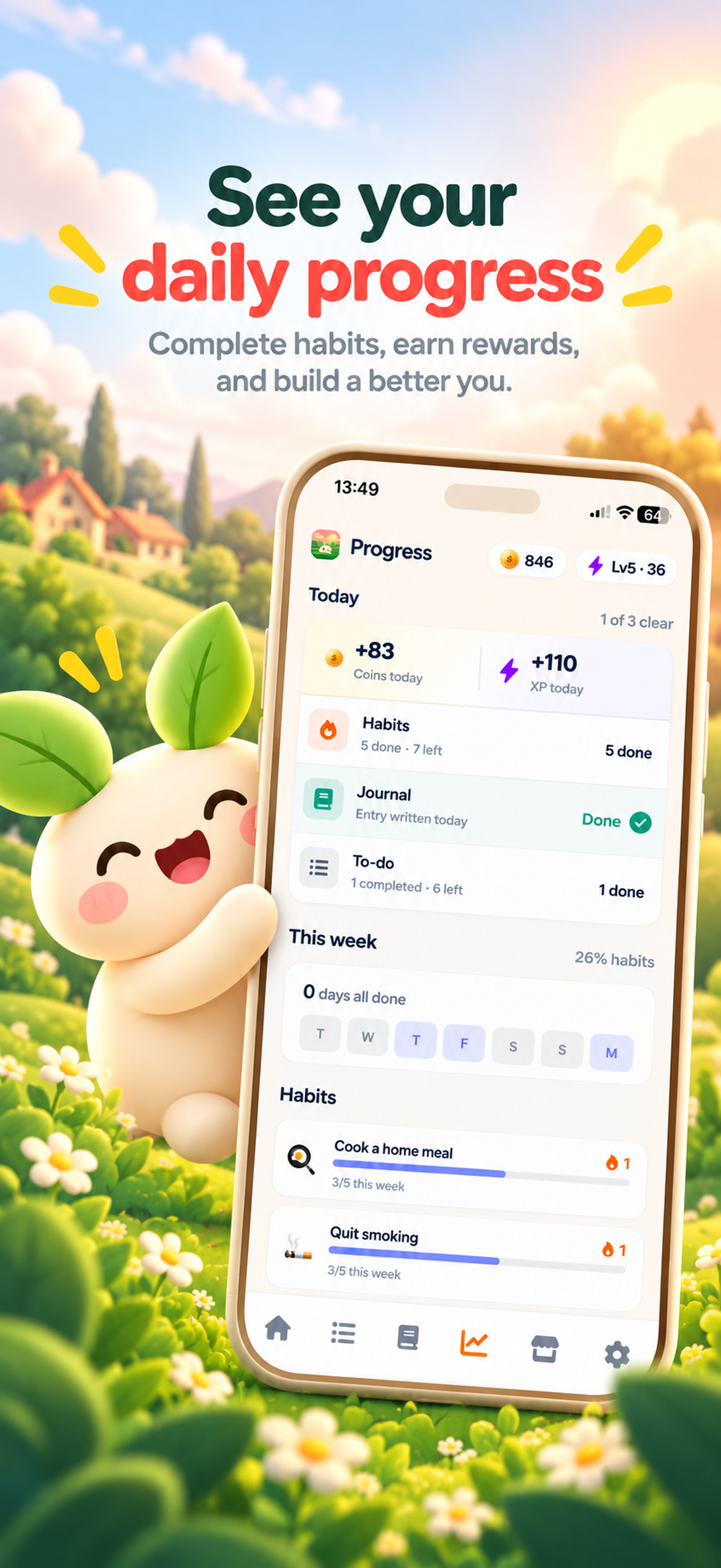
ThrivePal is a habit tracker app for iPhone and Android, free to download, with an optional Premium subscription adding more. Onboarding asks a few questions and suggests a starter set of habits. The app includes reminders, daily progress, streaks, a mood journal, a to-do list, coins, companions, badges, achievements, traits, outfits and scenes in the shop. Completing habits, journal entries and to-dos earns coins and grows your companion, which unlocks new forms as it levels up.
FAQ
What are good habits to put in a habit tracker?
Good habits are small, clear, and easy to measure. Try walk 10 minutes, drink 4 glasses of water, meditate 3 minutes, read 10 minutes, send one thoughtful message, or keep 15 phone-free minutes in the morning.
How many habits should I track at once?
Start with 3–5 habits. If you want to try more, keep every habit very small and review after 7 days. Add more only when your current habits feel easy.
What is the difference between checking off, counting, and timing a habit?
Check off yes/no habits, such as no caffeine after 4 PM. Count repetitions or servings, such as 2 push-ups or 4 glasses of water. Time habits where minutes matter, such as walking, reading, or focus sessions.
What should I track if I want to reduce screen time?
Track behavior you control, such as 15 phone-free minutes after waking, one intentional scroll window, phone away during dinner, or social media under a set daily limit. If your app does not measure screen time automatically, check it off manually.
How do I make a habit tracker less overwhelming?
Use level 1 habits, attach each one to a real cue, and track for 7 days before adding more. If you miss a day, choose the next smallest action and continue.